P(D): Thinking Clearly About the Probability of Doomsday

When people talk about the future of technology, especially artificial intelligence and robotics, the conversation often swings between two extremes.
On one side, there is excitement: smarter tools, faster research, safer workplaces, better healthcare, and new forms of creativity. On the other side, there is fear: machines becoming too powerful, humans losing control, or society stumbling into some kind of doomsday scenario.
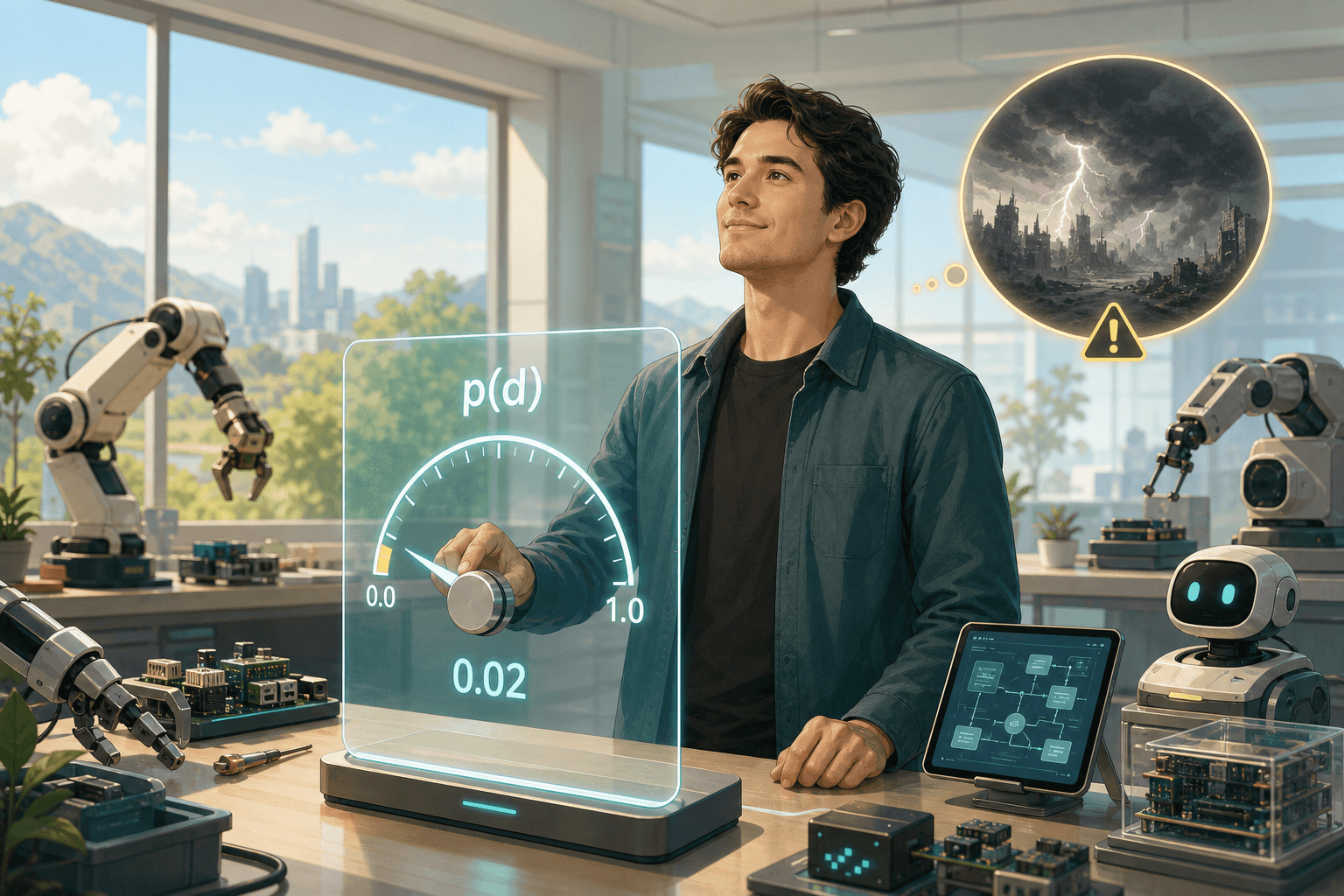
A useful way to talk about that fear is with a simple idea: p(d).
What P(D) Means
Here, p(d) means the probability of a doomsday scenario. It is a number between 0.0 and 1.0.
A value of 0.0 means there is no risk at all. A value close to 1.0 means the risk is extremely high. Most serious discussions live somewhere in between. The point of p(d) is not to predict the future perfectly. It is to give people a clearer way to express how worried they are.
For example, someone who thinks AI poses almost no existential risk might assign p(d) a value like 0.01. Someone who believes the risk is serious but not inevitable might choose 0.10 or 0.20. Someone deeply concerned about runaway technology might assign an even higher number.
The value itself is subjective, but the framework is useful because it forces people to be specific. Saying "AI is dangerous" is vague. Saying "I think p(d) is 0.05" invites a better conversation: Why that number? What assumptions are behind it? What would make it go up or down?
P(d) is not a crystal ball. It is a way to make our assumptions visible.
Max Li's Optimistic View
Max Li is an optimist. He tends to assign a low value to p(d). In his view, AI and robots are tools. Powerful tools, yes, but still tools.
They are not conscious beings. They do not have inner lives, desires, fears, ambitions, or moral intentions. They process information and follow patterns; they do not "want" anything in the human sense.
That does not mean risk should be ignored. Tools can still be misused. Systems can fail. Bad incentives can create real harm. But seeing AI and robots as tools helps keep the conversation grounded.
The main question becomes not "Will machines decide to destroy us?" but "How do humans design, govern, and use these tools responsibly?"
Optimism Without Denial
The future is not guaranteed, but it is also not doomed. By thinking in terms of p(d), we can talk about risk without panic, optimism without denial, and technology without mythology.
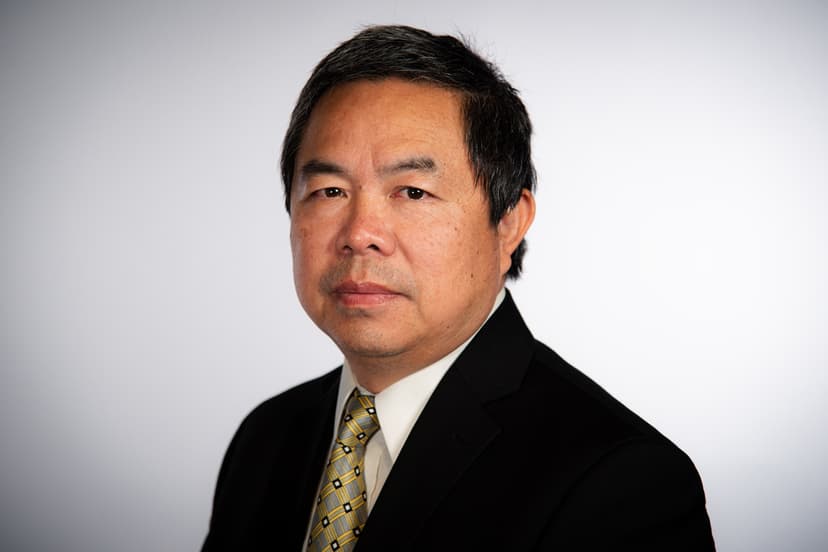
Max Li
Founder, Grassrootech
max@grassrootech.comMax is dedicated to bridging the gap between advanced research and practical industry application. Drawing on his experience at IBM Research and Union University, he leads the development of AI solutions that drive meaningful progress.
Read More
What Should You Do If You Have Used Up Your Quota for OpenAI Codex?
OpenAI Codex is excellent, but quota limits are real. Here is a practical fallback strategy for developers who want to keep building without jumping immediately to a more expensive plan.
Have you heard of OPC: One Person Company?
AI is making a new kind of company imaginable: one person coordinating agents, software, and distribution with the leverage of a much larger team.